You Are Running Your Online Store from WhatsApp. Here Is Why That Costs You Sales.
If you are still taking orders through WhatsApp DMs, you are losing at least 20 percent of your potential sales. Here is the math, and what to do about it.
I know a woman in Bandung who sells homemade cookies. She has 400 contacts in her phone. Every order comes through WhatsApp. "Mbak, cookies coklat masih ada?" "Bisa pesan 3 toples?" "Ongkir ke Surabaya berapa?" She replies to every message personally. She is the most dedicated business owner I know. She is also losing about Rp 2 million a month in missed sales. Let me explain.
The invisible cost of WhatsApp selling hits at night. When a customer messages you at 10pm and you reply at 7am, you probably already lost the sale. Research shows most Indonesian online buyers move on within 15 to 30 minutes if they do not get a response. They open Shopee. They find a competitor. They buy from someone who was awake. You did not lose because your product was bad. You lost because you were sleeping.
Now multiply that by 30 days. If you get 5 inquiries a day and miss 1 of them because you were busy, that is 30 missed opportunities a month. Even if only half of those convert, that is 15 lost sales. At an average order of Rp 100K, that is Rp 1.5 million. Gone. Not because your cookies are not good enough. Because your store is a chat app.
Let me be direct about something. Replying to product inquiries is not running a business. It is customer service. If customer service is eating 2 hours of your day, that is 60 hours a month. That is a full-time job. But you are also the baker, the packer, the delivery coordinator, and the accountant. You cannot scale a business where every order begins with "Masih ada stock?"
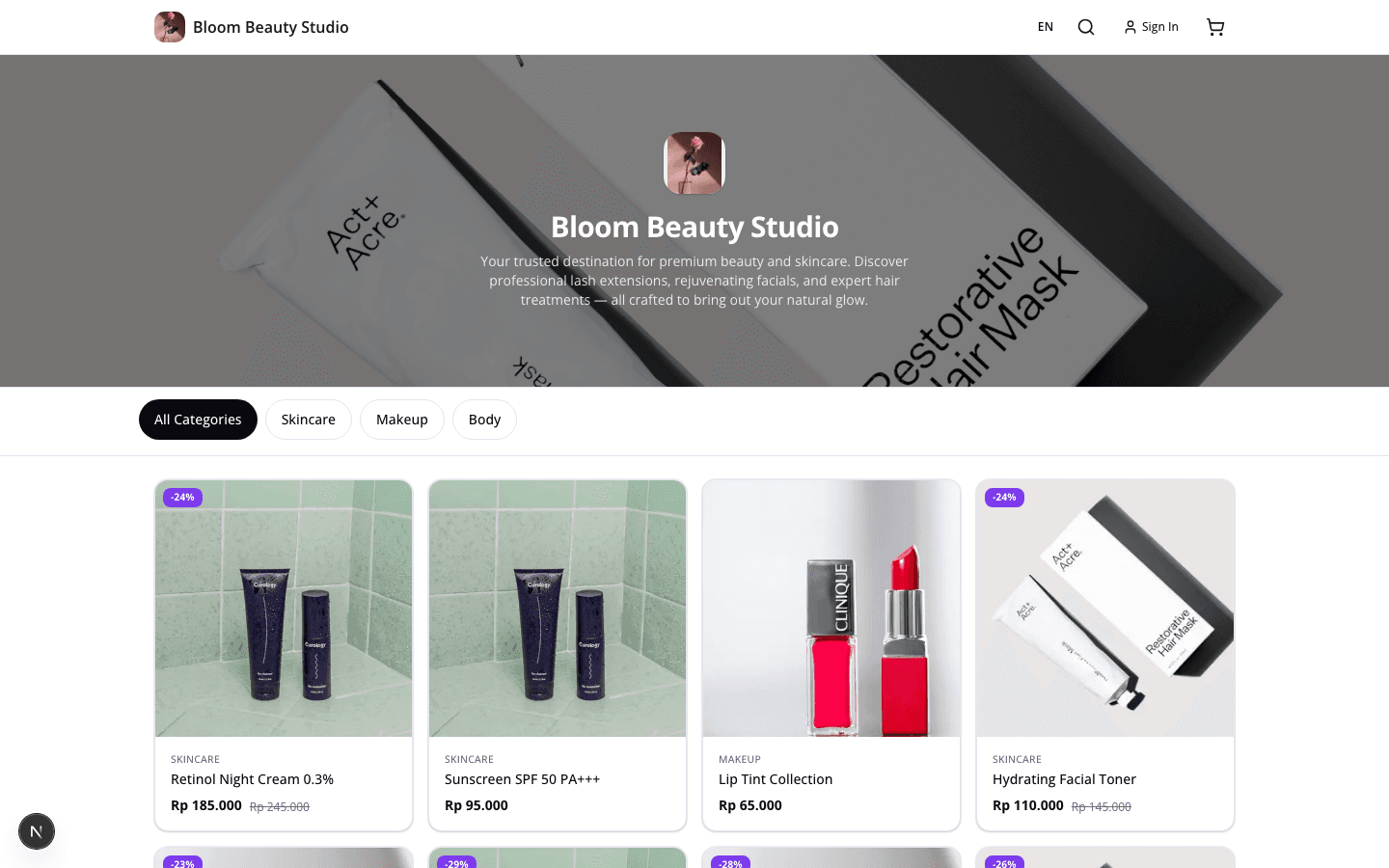
Here is what a store does that WhatsApp does not. A store shows your products, prices, and availability without you typing it every time. A customer can browse at 11pm, add to cart, and pay without you touching your phone. You wake up to a notification that says "New order: Rp 150.000." You pack it. You ship it. You did not reply to a single message.
I am not telling you to delete WhatsApp. Your customers are there. You should be there too. But WhatsApp should be for relationship, not transactions. Broadcast your new products. Answer specific questions. Send order updates. But the actual buying, the checkout, the payment. That belongs in a system designed for it.
OperoStore sends order notifications to your WhatsApp when a customer places an order on your store. You still get the ping. The customer still gets a human response within minutes for questions. But the checkout. The boring, repetitive, error-prone checkout. It happens without you. Your WhatsApp goes back to being a communication tool instead of a makeshift point of sale.
I asked 5 UMKM owners to track their WhatsApp orders for one week. The average inquiry-to-order ratio was 4 to 1. Meaning for every 4 people who message, only 1 buys. Average time per inquiry: 6 minutes. That is 24 minutes of messaging for one sale. If you value your time at even Rp 50K per hour, that one sale cost you Rp 20K in labor alone. Before product cost. Before packaging. Before shipping.
The migration does not have to be sudden. Start with your top 5 products. Put them in a store. Share the link. Keep WhatsApp for questions. Once your customers get used to the link, add the rest. You do not need to abandon your workflow overnight. You need to stop the part where your sales depend on whether you picked up your phone.
If you are ready to try a store that sends WhatsApp notifications when orders come in, with no per-transaction fees, toko online dengan notifikasi WhatsApp OperoStore starts at Rp 100K per month. Free trial included.
Here is a simple experiment. For the next 3 days, count how many WhatsApp inquiries you get. Count how many turn into sales. Count how many times someone says "Oke, nanti saya pesan ya" and never comes back. If the numbers surprise you, you know what to do.