How to Choose a POS for Your Restaurant in Indonesia
Restaurant POS needs table management, split bills, and kitchen display. Here is what actually works for Indonesian restaurants.
Restaurants in Indonesia have a problem that retail stores do not. Customers sit at tables, order multiple rounds, sometimes split the bill, and the kitchen needs to see what was ordered.
I have spent time in restaurants in Jakarta and Yogyakarta watching how they handle orders. The places that do it well have a system that connects the front and the back. The places that struggle use paper notes that get lost between the table and the kitchen.
Here is what a restaurant POS needs to do well. First, table management. You need to know which tables are occupied, which are waiting for food, and which are ready for the next customer. A visual map of the floor makes a big difference.
Second, split billing. Groups of friends eating together often want to pay separately. Manually splitting a bill of six items across three people is a headache. A POS that does this automatically saves time and reduces arguments.
Third, the kitchen connection. When the waiter takes an order at the table, the kitchen should see it immediately. No shouting orders through a hatch. No handwritten notes stuck on a board.
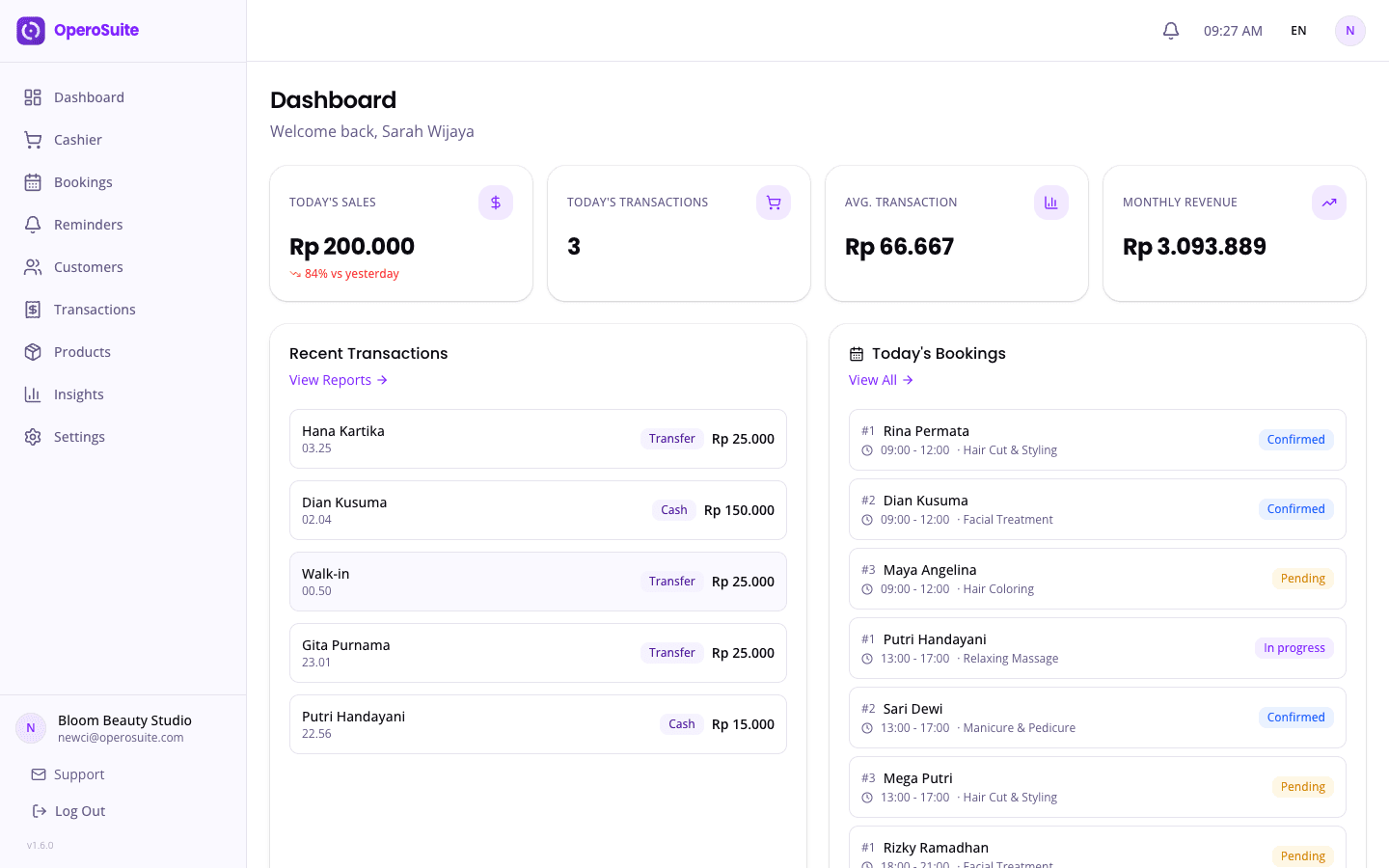
Other useful features include order modifications like extra sambal or no onion, combo meal setup, and delivery order integration. aplikasi kasir OperoSuite handles table management, split bills, and sends orders directly to the kitchen. Built for phones and tablets, starts at Rp 150,000 per month.
Why do restaurants need a different POS than retail stores?
Table-based ordering, split bills, and kitchen coordination — none of which a retail POS is built to handle well.
Does split billing really need to be automatic?
For groups, yes. Manually splitting a bill across several people by hand is slow and creates disputes over who ordered what.
How important is the kitchen connection in a restaurant POS?
Very — it is the difference between orders getting lost between the table and the kitchen (paper notes) and orders showing up instantly where they are being prepared.