Katalog WhatsApp vs Toko Online: Mana yang Lebih Banyak Jualan?
Kamu lagi ngelola pesanan di 3 chat WhatsApp, inbox Facebook, dan DM Instagram. Pasti ada yang kelewat. Ini cara memutuskan apakah kamu butuh toko online beneran.
Kamu lagi pegang 3 chat WhatsApp, inbox Facebook, dan DM Instagram sekaligus. Ada pelanggan nanya "Masih ada?" di chat satu, yang lain kirim screenshot transfer di thread beda, dan seseorang barusan DM di Instagram nanya harga yang sebenernya udah ada di foto katalog minggu lalu. Kamu jadi notifikasi berjalan. Dan kamu tahu pasti ada yang bakal kelewat.
Katalog WhatsApp memang keliatan gratis dan gampang. Dan buat beberapa minggu pertama emang iya. Tapi coba saya kasih tahu biaya sebenernya. Pelanggan yang chat tengah malam — kamu balas jam 7 pagi, mereka udah beli dari orang lain. Pelanggan yang minta daftar harga — kamu scroll galeri dan kirim screenshot minggu lalu. Pelanggan yang mau pesan ulang dari 2 bulan lalu — kamu scroll 10 menit nyari chat yang bener. Harganya nol rupiah. Biaya tersembunyinya ada di setiap penjualan yang hilang antara "Masih ada?" dan balasan kamu enam jam kemudian.
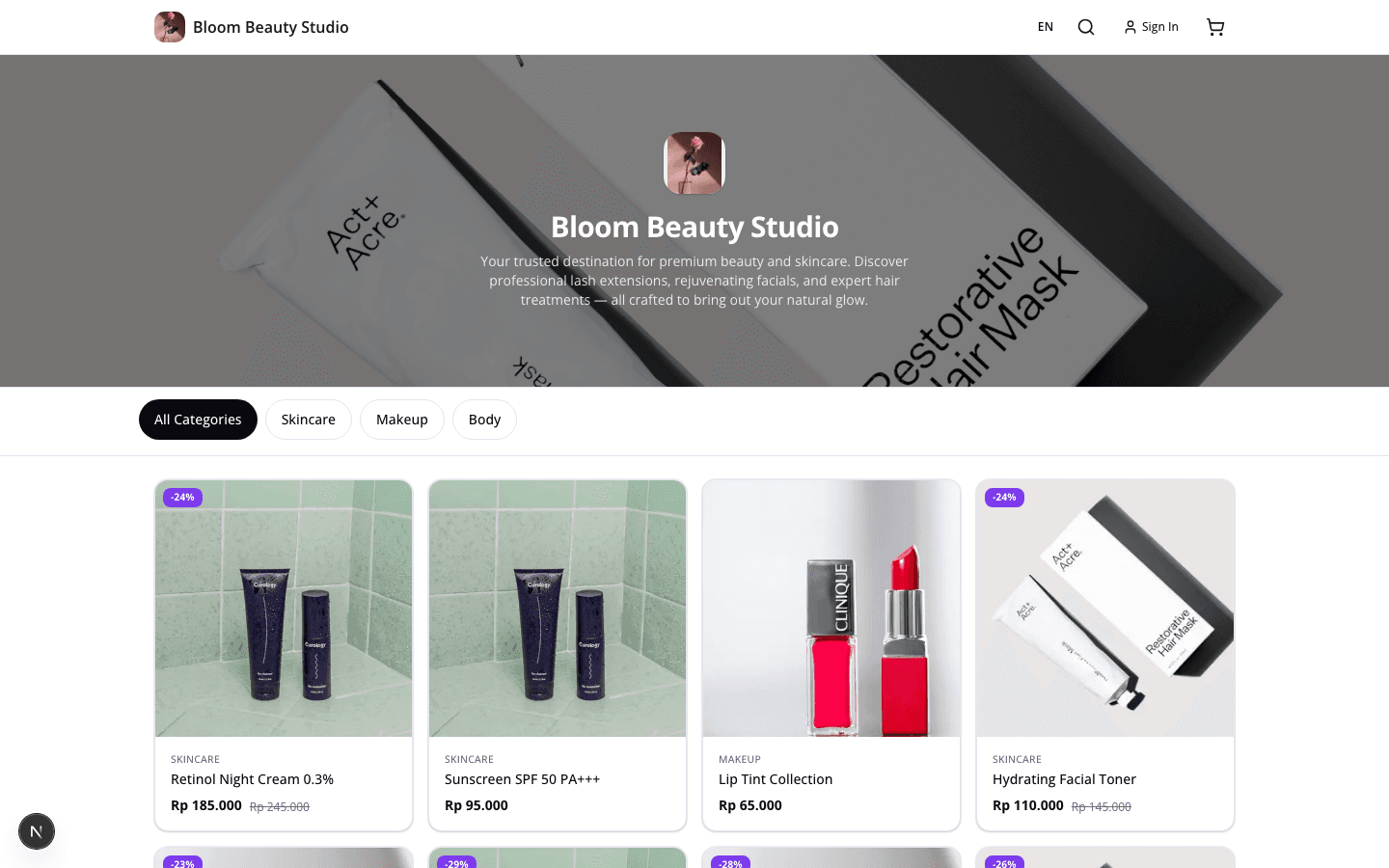
Ini yang dilakukan toko online beneran secara beda. Katalog produk selalu terbaru, nggak perlu screenshot. Harga kelihatan jelas, nggak perlu "DM for price." Checkout jalan tanpa kamu. Stok terupdate otomatis. Pembayaran udah built in — QRIS, transfer, apa pun yang pelanggan kamu pakai. Toko kerja pas kamu tidur. Dia nggak capek. Dia nggak perlu scroll 200 pesan buat nyari pesanan kemarin.
Sekarang saya fair dulu. Katalog WhatsApp itu works buat skenario yang sangat spesifik. Produk kamu di bawah 5 item. Pelanggan kamu semua orang yang kamu kenal secara personal. Volume masih rendah banget jadi kamu bisa handle tiap pesanan manual tanpa ada yang kelewat. Kalau itu kamu, WhatsApp cukup — buat sekarang. Nggak semua harus jadi website.
Tapi ini saat WhatsApp mulai nggak cukup. Kalau produk kamu udah lebih dari 10, kamu udah mulai bingung mana yang masih ada stok dan mana yang habis minggu lalu. Kalau pelanggan nanya "Masih ada?" lebih dari dua kali sehari, kamu butuh pelacakan stok. Kalau kamu kelewat pesanan pas tidur atau pas lagi bantu pelanggan lain, kamu butuh yang jalan 24 jam. WhatsApp itu alat komunikasi. Dia nggak pernah dirancang buat jadi toko. Kamu nggak akan jalanin warung dari daftar panggilan tak terjawab di HP pribadi. Logika yang sama.
Jawaban tengahnya adalah yang kebanyakan UMKM sebenernya butuh. Kamu nggak harus ninggalin WhatsApp. Pelanggan kamu udah di sana. Triknya adalah misahin discovery dari transaksi. OperoStore kirim notifikasi pesanan KE WhatsApp kamu pas pelanggan checkout di toko. Kamu tetap dapat ping-nya. Pelanggan belanja di etalase beneran. Dapat yang terbaik dari dua sisi. Kamu nggak ninggalin WhatsApp — kamu ngasih dia kerjaan yang emang dia bisa kerjain dengan baik.
Siap bikin toko kamu? Baca panduan saya: Cara Buat Toko Online Gratis untuk Bisnis Kecil di Indonesia. Cuma butuh kurang dari 10 menit dan kamu nggak perlu skill teknis apa pun.
Dan begitu kamu udah punya pelanggan di toko, program loyalitas bikin mereka balik lagi: Cara Meningkatkan Retensi Pelanggan dengan Program Loyalitas Sederhana. Dapetin pelanggan baru itu lima kali lebih mahal daripada ngejaga yang udah ada. Bikin yang udah ada layak dipertahanin.
OperoStore ngasih dua-duanya — etalase beneran buat pelanggan kamu plus notifikasi WhatsApp buat kamu. Rp 100.000 tetap per bulan. Pelanggan lihat-lihat, tambah ke keranjang, checkout sendiri. Kamu dikasih tahu pas pesanan masuk. Nggak perlu scroll-scroll chat lagi buat nyari pesanan kemarin. Nggak perlu "maaf barang itu udah habis kemarin tapi saya lupa update katalog." Toko yang ngelacak stok. Kamu fokus jalanin bisnis. Coba toko online gratis sekarang.
Ini tes simpelnya. Kalau ngurusin pesanan manual udah makan lebih dari 30 menit sehari, waktunya pindah. Kalau kamu pernah kehilangan penjualan karena balasnya kelamaan, waktunya pindah. Kalau kamu mau bisnis kamu tumbuh lebih dari yang bisa kamu handle sendiri di WhatsApp, kamu udah tahu jawabannya. Katalog itu titik awal yang bagus. Sekarang waktunya yang beneran.