Tips Memilih Aplikasi Kasir untuk Restoran di Indonesia
POS restoran butuh manajemen meja, split bill, dan tampilan dapur. Ini yang benar-benar bekerja untuk restoran Indonesia.
Restoran di Indonesia punya masalah yang tidak dimiliki toko ritel. Pelanggan duduk di meja, pesan beberapa ronde, kadang bayar pisah, dan dapur perlu lihat apa yang dipesan.
Saya sudah habiskan waktu di restoran Jakarta dan Yogyakarta, lihat bagaimana mereka menangani pesanan. Tempat yang berjalan baik punya sistem yang menghubungkan depan dan belakang. Tempat yang kesusahan pakai catatan kertas yang hilang antara meja dan dapur.
Ini yang perlu dilakukan POS restoran dengan baik. Pertama, manajemen meja. Kamu harus tahu meja mana yang terisi, mana yang sedang menunggu makanan, dan mana yang siap untuk pelanggan berikutnya. Peta visual ruangan sangat membantu.
Kedua, split bill. Kelompok teman yang makan bersama sering ingin bayar terpisah. Memisahkan bon enam item untuk tiga orang secara manual itu menyakitkan. POS yang melakukan ini otomatis menghemat waktu dan mengurangi debat.
Ketiga, koneksi dapur. Saat pelayan mencatat pesanan di meja, dapur harus langsung melihatnya. Tidak perlu teriak pesanan lewat lobang. Tidak perlu catatan tangan ditempel di papan.
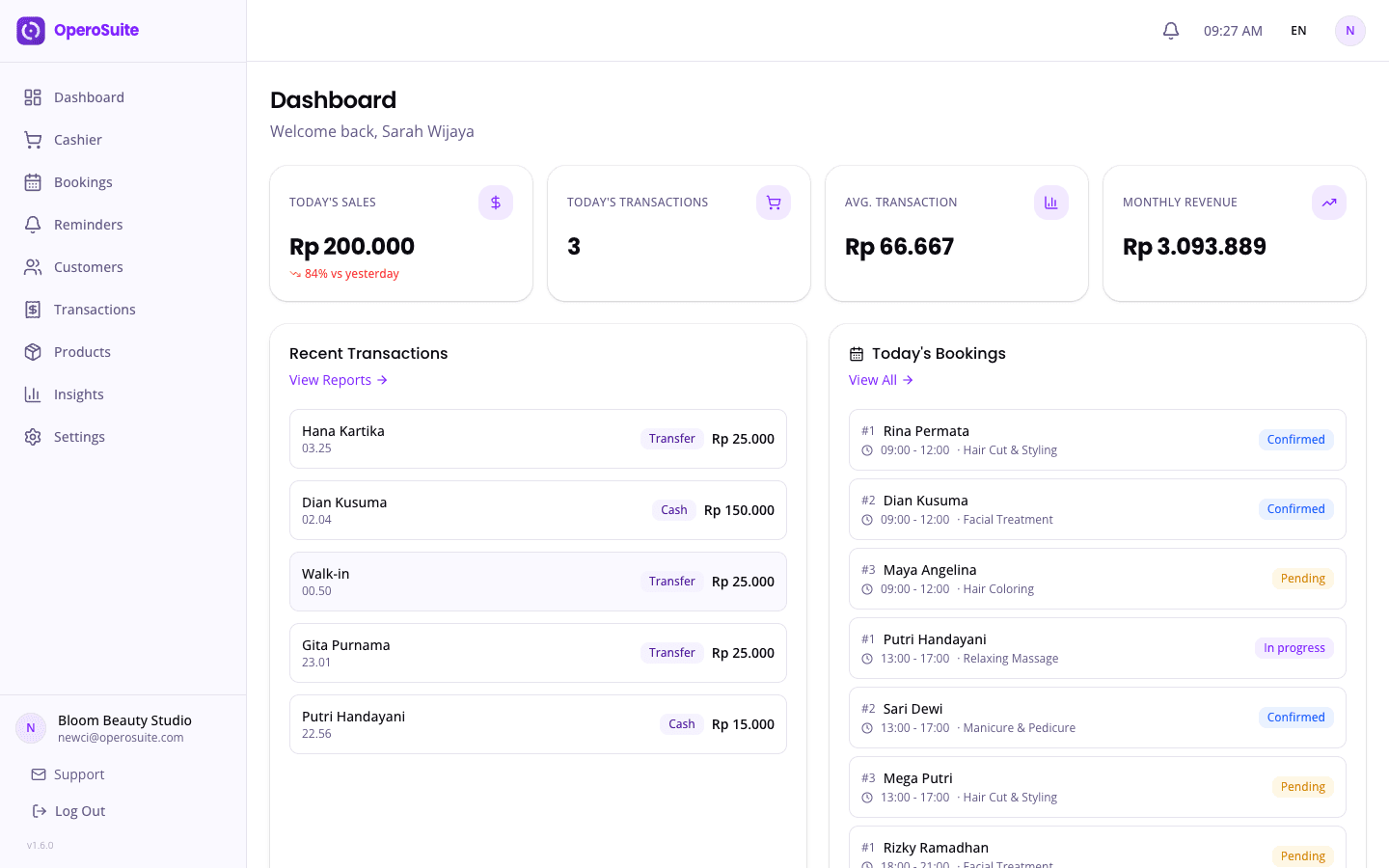
Fitur lain yang berguna termasuk modifikasi pesanan seperti tambah sambal atau tanpa bawang, paket hemat, dan integrasi pesanan antar. aplikasi kasir OperoSuite menangani manajemen meja, split bill, dan kirim pesanan langsung ke dapur. Dibuat untuk telepon dan tablet, mulai Rp 150.000 per bulan.
Kenapa restoran butuh POS yang beda dari toko ritel?
Pemesanan berbasis meja, split bill, dan koordinasi dapur — semuanya nggak bisa ditangani dengan baik oleh POS ritel biasa.
Apakah split bill beneran perlu otomatis?
Buat grup, iya. Memisahkan bon secara manual untuk beberapa orang itu lambat dan sering bikin debat soal siapa pesan apa.
Seberapa penting koneksi dapur di POS restoran?
Sangat penting — itu beda antara pesanan hilang antara meja dan dapur (catatan kertas) dengan pesanan langsung muncul di tempat masakan disiapkan.